Signs of a Heroin Addict and How Treatment Can Help
Heroin addiction is a serious condition that can affect a person's health, thoughts, behavior, and daily life. A heroin addict may struggle to control drug use even when it causes problems at home, work, or school. Some signs include pinpoint pupils, unusual sleep patterns, strong cravings, secrecy, and changes in personal habits. However, not everyone shows the same warning signs.
At Grant Me the Courage Recovery, located in Brea, California, individuals and families can explore professional support for substance use concerns. The effects of heroin addiction can become more serious over time, but treatment can help people regain control of their lives. Understanding the warning signs, health risks, and available treatment options is an important first step toward recovery. This guide explains how heroin addiction develops, how to recognize it, what happens during withdrawal, and how professional treatment can support long-term recovery.
What Does It Mean to Be a Heroin Addict?
A heroin addict is someone who has developed an addiction to heroin and struggles to stop using it, even when the drug causes harm. Heroin is an opioid that affects the brain and central nervous system. It can create strong feelings of pleasure and pain relief, which may lead to repeated use.
Heroin addiction is also known as opioid use disorder (OUD). It is a medical condition that can affect how a person thinks, feels, and makes decisions. Over time, getting and using heroin may become more important than work, family, health, and other responsibilities.
Heroin Addiction vs. Physical Dependence
Addiction and physical dependence are related, but they do not mean the same thing. Physical dependence happens when the body gets used to a drug. If someone suddenly stops using it, they may experience withdrawal symptoms. Their body may also need more of the drug to get the same effect. This is called tolerance.
Addiction involves a loss of control over drug use. A person may continue using heroin even when they know it is harming their health, relationships, or finances. Someone can develop physical dependence without having an addiction. A proper medical assessment helps determine whether a person has opioid use disorder.
How Heroin Addiction Develops Over Time
Heroin affects the brain's reward system. It attaches to opioid receptors, which are involved in pain control, pleasure, and other body functions. When heroin activates these receptors, the brain releases chemicals that create feelings of pleasure and relaxation. Repeated use can change how the brain responds to rewards and stress.
A person may begin using heroin to feel good or escape emotional pain. Over time, they may use it to avoid withdrawal symptoms or strong cravings. Research by Avram Goldstein in the Journal of Psychoactive Drugs examined the brain pathways and opioid receptors involved in heroin addiction. This research helps explain why repeated drug use can change the brain's reward system.
Can Genetics Influence the Risk of Heroin Addiction?
Genetics may affect a person's risk of developing heroin addiction. Some people may inherit biological traits that make them more vulnerable to substance use problems. A 2008 study published in Molecular Psychiatry examined genetic patterns in 104 people with a history of severe heroin addiction and 101 control participants.
Researchers identified genetic variations that may be linked to increased risk or protection. However, the study does not mean that a person will become addicted because of their genes. Family environment, stress, mental health, drug exposure, and personal experiences can also influence addiction risk.
What Are the Signs of a Heroin Addict?
The signs of a heroin addict can appear in physical health, behavior, and emotional well-being. Some changes may develop slowly, while others may become noticeable after repeated drug use. One sign alone does not prove that someone has an addiction. However, several changes happening together may be a reason to seek professional advice.
Physical Signs of Heroin Addiction
Heroin affects the nervous system and several other parts of the body. Common physical signs include:
- Pinpoint pupils: The pupils may become unusually small, even in normal lighting.
- Weight changes: A person may lose weight because of poor eating habits or reduced interest in meals.
- Unusual sleep patterns: They may sleep for long periods or struggle to maintain a normal sleep schedule.
- Itching and skin problems: Some people experience itching, sores, or skin infections.
- Injection marks: Repeated injections may leave marks, scars, or bruises on the skin.
- Poor personal hygiene: Someone may stop paying attention to bathing, grooming, or clean clothing.
Not everyone who uses heroin injects it. Some people use other methods, so injection marks are not always present.
Behavioral Changes to Watch For
Changes in daily habits may be easier to notice than physical symptoms. A person struggling with heroin addiction may:
- Become secretive about where they go or who they spend time with.
- Ask for money often or have unexplained expenses.
- Miss work, school, or important family events.
- Avoid people who question their drug use.
- Spend more time looking for or using heroin.
- Lose interest in hobbies and activities they once enjoyed.
These changes may affect trust between family members and create problems in everyday life.
Psychological Signs of Heroin Addiction
Heroin addiction can also affect a person's thoughts and emotions. Some common signs include:
- Strong cravings for heroin.
- Difficulty controlling drug use.
- Irritability and sudden mood changes.
- Anxiety and feelings of sadness.
- Trouble concentrating or making decisions.
- Emotional distress when heroin is unavailable.
Some people may use heroin to cope with stress, painful memories, or mental health concerns. However, repeated use can make these problems harder to manage.
Can Someone Hide a Heroin Addiction?
Yes. Some people continue working, attending school, and maintaining relationships while struggling with heroin addiction. They may hide drug use, make excuses for missing responsibilities, or avoid conversations about their behavior. Others may try to keep their appearance and daily routine unchanged.
This is why it is important not to judge someone's condition based only on how they look. Changes in behavior, money problems, and repeated difficulties with responsibilities may provide stronger reasons for concern.
How Heroin Addiction Affects Everyday Life
Heroin addiction can affect almost every part of a person's daily routine. The need to find and use the drug may become a priority, leaving less time and energy for other responsibilities.
Effects on Family and Personal Relationships
Repeated drug use can damage trust between family members, partners, and friends. A person may lie about their drug use, miss important events, or make promises they cannot keep. Loved ones may feel worried, angry, confused, or helpless. Arguments may become more common, and family members may struggle to communicate. Professional support can help families understand addiction and learn how to support recovery without ignoring their own needs.
Financial and Work-Related Problems
Heroin use can create serious financial pressure. A person may spend money on drugs instead of paying rent, buying food, or meeting other basic needs. They may also struggle to keep a job because of missed shifts, poor performance, or health problems. Over time, these issues can lead to debt, job loss, and housing difficulties.
Social Isolation and Loss of Interest in Activities
Someone struggling with heroin addiction may stop spending time with friends and family. They may also lose interest in sports, hobbies, and activities that once brought them happiness. Their social circle may become smaller as drug use takes up more of their time. This isolation can make emotional problems worse and reduce access to healthy support.
What Are the Short-Term and Long-Term Effects of Heroin Addiction?
Heroin affects the brain, breathing, heart rate, and other body functions. The effects depend on the amount used, how it is taken, a person's health, and whether other substances are involved.
Short-Term Effects of Heroin Use
Heroin can produce several effects soon after use, including:
- Drowsiness and reduced alertness.
- A feeling of relaxation or pleasure.
- Nausea and vomiting.
- Itching and dry mouth.
- Slowed breathing.
- A slower heart rate.
- Reduced ability to respond to surroundings.
One of the most serious short-term risks is slowed breathing. If breathing becomes too slow or stops, the person may experience an overdose.
Long-Term Health Complications
Repeated heroin use can cause lasting health problems. Some complications are related to the drug itself, while others are linked to how it is used.
Possible complications include:
- Lung problems: Repeated opioid use can affect breathing and increase the risk of respiratory complications.
- Heart infections: People who inject heroin may develop infections that affect the heart, including infective endocarditis.
- Hepatitis: Sharing needles or other injection equipment can spread hepatitis B and hepatitis C.
- Skin infections: Injection sites may develop abscesses, cellulitis, and other infections.
- Kidney and liver problems: Infections, poor health, and other complications may affect these organs.
A 1967 review by Louria, Hensle, and Rose, published in Annals of Internal Medicine, examined the major medical complications linked to heroin addiction. Although this research is historical, it helps show that heroin addiction has long been associated with serious health problems. Current medical assessment is important for understanding and treating these conditions.
Mental Health Effects of Long-Term Heroin Use
Long-term heroin use can affect emotional health and daily functioning. Some people experience anxiety, depression, and ongoing emotional distress. They may also struggle with poor concentration, low motivation, and difficulty managing stress. These problems can make it harder to maintain relationships and follow daily routines. Mental health concerns should be assessed during addiction treatment because they may affect a person's recovery needs.
What Happens When a Heroin Addict Stops Using?
When a person who has developed physical dependence stops using heroin, the body needs time to adjust. This process can cause withdrawal symptoms. Withdrawal can be uncomfortable and difficult to manage without support. Medical guidance can help a person understand what to expect and choose a safe treatment plan.
Common Heroin Withdrawal Symptoms
Common withdrawal symptoms include:
- Muscle aches and body pain.
- Sweating and chills.
- Runny nose and watery eyes.
- Anxiety and restlessness.
- Trouble sleeping.
- Nausea and vomiting.
- Stomach cramps and diarrhea.
- Strong cravings for heroin.
Symptoms can affect people differently. Their severity may depend on how long they have used heroin, how often they use it, and their overall health.
How Long Does Heroin Withdrawal Last?
 (opens the full-size image in a new tab)
Tap the image to enlarge it.
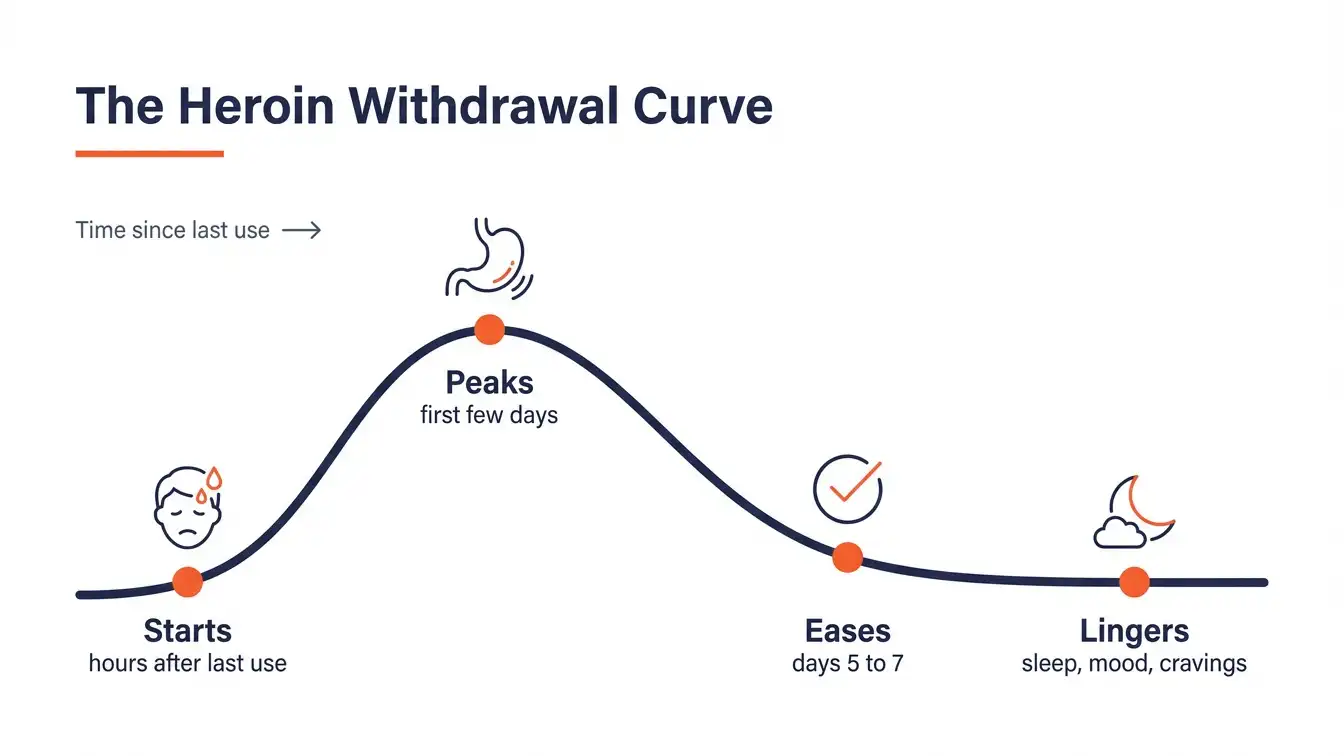
Heroin withdrawal often begins within several hours after the last use. Early symptoms may include anxiety, sweating, muscle aches, and restlessness. Symptoms can become more intense during the next few days. Nausea, vomiting, stomach cramps, and diarrhea may also develop.
Many physical symptoms begin to improve within about five to seven days, but the timeline varies. Sleep problems, mood changes, and cravings may continue for longer. The MedlinePlus guide to opioid withdrawal (opens in a new tab) explains common withdrawal symptoms and when they may begin. The information can help people understand why medical support is important.
Why Medical Support Matters During Withdrawal
Medical support can help manage withdrawal symptoms and identify other health concerns. A healthcare professional can assess a person's condition and recommend suitable care. Trying to stop without support may make the process harder. Vomiting and diarrhea can also cause dehydration and other complications.
Detoxification is only the first step for many people. It helps the body adjust after drug use, but it does not address every reason behind addiction. Continued treatment may be needed to manage cravings, emotional concerns, and the risk of returning to drug use.
What Are the Dangers of a Heroin Overdose?
A heroin overdose happens when the drug affects the body so strongly that normal functions, especially breathing, become dangerously slow or stop. Heroin can slow the central nervous system. When someone takes too much, they may lose consciousness and stop breathing properly. An overdose can cause permanent brain damage or death without quick medical help.
Warning Signs of a Heroin Overdose
Recognizing an overdose early can save someone's life. Watch for these warning signs:
- Slow, shallow, or stopped breathing.
- Very small or pinpoint pupils.
- Unconsciousness or inability to wake up.
- Blue, gray, or pale lips and fingertips.
- A limp or unresponsive body.
- Choking, gurgling, or unusual snoring sounds.
If you suspect an overdose, do not wait for every symptom to appear. Treat the situation as an emergency.
What to Do If Someone Overdoses on Heroin
 (opens the full-size image in a new tab)
Tap the image to enlarge it.
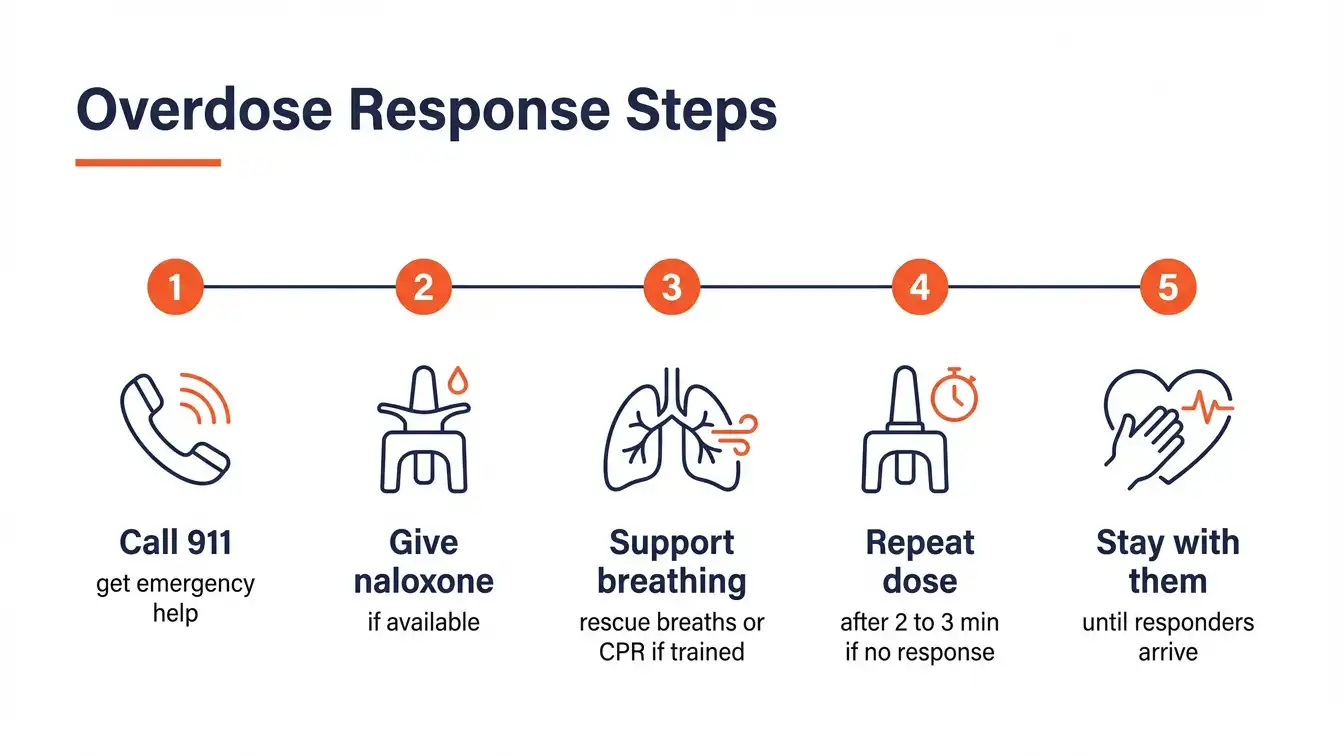
Take these steps if someone may be experiencing a heroin overdose:
- Call 911: Get emergency medical help immediately.
- Give naloxone: Use naloxone if it is available. It can reverse the effects of an opioid overdose.
- Support breathing: Give rescue breaths or CPR if you are trained. Follow the emergency operator's instructions.
- Give another dose if needed: If the person does not respond, give another naloxone dose after two to three minutes, following the product instructions.
- Stay with the person: Keep them safe and remain with them until emergency responders arrive.
The CDC's overdose response guidance (opens in a new tab) explains these emergency steps. Naloxone can save a life, but its effects may wear off, so emergency medical care is still necessary.
Why Overdose Risk Increases After a Period of Abstinence
When someone stops using heroin, their tolerance can decrease. This means their body may no longer handle the same amount of the drug they used before. If they return to their previous amount after a period without heroin, the drug may affect their body more strongly. This can increase the risk of an overdose. Relapse does not mean someone has failed at recovery. However, returning to drug use after abstinence can be especially dangerous. Continued medical support and overdose prevention are important parts of recovery.
How Is Heroin Addiction Treated?
Heroin addiction is treatable. A professional treatment plan can help people manage withdrawal, reduce cravings, understand their triggers, and develop healthier habits. Treatment may include medical care, medication, counseling, and structured addiction programs. The right approach depends on the person's health, drug use history, mental health, and daily needs.
Medical Detoxification and Withdrawal Management
Medical detoxification helps people manage withdrawal as their bodies adjust to the absence of heroin. During this process, healthcare professionals may monitor physical symptoms, provide medical support, and check for complications. They can also help manage discomfort and assess whether additional treatment is needed.
However, detox alone does not treat the reasons behind addiction. A person may still experience cravings and emotional challenges after withdrawal ends. Continuing with an appropriate treatment program can help address these concerns.
Medication for Opioid Use Disorder

Medication is an important part of treatment for many people with opioid use disorder. Common medications include methadone, buprenorphine, and naltrexone.
- Methadone: Helps reduce withdrawal symptoms and cravings. It is a long-acting medication that works on opioid receptors.
- Buprenorphine: Helps control cravings and withdrawal symptoms while reducing the effects of other opioids.
- Naltrexone: Blocks opioid receptors and helps prevent opioids from producing their usual effects. A person must complete the required opioid-free period before starting it.
A historical study by Vincent Dole and Marie Nyswander, published in JAMA in 1965, examined methadone treatment for people addicted to heroin. The researchers reported that the medication helped reduce drug cravings and supported improvements in work, education, and family life when combined with a rehabilitation program.
Modern treatment continues to use medication as part of care for opioid use disorder. The SAMHSA medication treatment guide (opens in a new tab) explains the role of approved medications and other recovery services. Medication should always be prescribed and monitored by qualified healthcare professionals. Treatment may continue for an extended period based on individual needs.
Behavioral Therapy and Counseling
Counseling can help people understand the thoughts, emotions, and situations connected to their drug use.
Behavioral therapy may help individuals:
- Recognize situations that trigger cravings.
- Develop healthier ways to manage stress.
- Improve decision-making skills.
- Address emotional and mental health concerns.
- Build routines that support recovery.
Individual counseling provides space to discuss personal challenges. Group counseling can also help people connect with others who understand the recovery process.
Inpatient and Outpatient Addiction Treatment
Treatment settings vary based on a person's needs and the level of care they require. Inpatient treatment provides care in a residential or hospital setting. People receive structured support and supervision throughout their stay. This option may be suitable for individuals who need a higher level of care.
Outpatient treatment allows people to attend scheduled treatment sessions while continuing to live at home. It may include individual counseling, group therapy, and recovery planning. Some outpatient programs offer more intensive support through Partial Hospitalization Programs (PHP) and Intensive Outpatient Programs (IOP). A treatment professional can assess the person's condition and recommend an appropriate level of care.
What Happens When Standard Heroin Addiction Treatment Does Not Work?
Some people continue struggling with heroin addiction even after trying different treatment approaches. This does not mean that recovery is impossible. It may mean that their current treatment plan needs to be reviewed.
A 2015 systematic review published in The British Journal of Psychiatry examined supervised injectable diamorphine treatment for people with severe heroin dependence who had not responded to standard treatment. The review included six randomized controlled trials and found reduced illicit heroin use among participants receiving this specialized treatment compared with control groups.
However, supervised injectable heroin treatment is a specialized medical intervention. It is not a routine treatment option in the United States. For most people, the next step is to receive another professional assessment. Their care team may adjust medications, counseling, treatment intensity, or other support based on their needs.
How to Help Someone Struggling With Heroin Addiction
Watching someone struggle with heroin addiction can be difficult for family members and friends. You may feel worried about their health or unsure how to approach them. Your support can make a difference, but you do not have to manage their addiction alone.
How to Talk to Someone About Their Heroin Use
Choose a calm and private time to talk. Avoid starting the conversation during an argument or when the person is under the influence of drugs. Explain what you have noticed and why you are concerned. Use clear and caring language instead of blame or threats. Give them time to speak. Listen to their concerns and encourage them to consider professional help.
What to Do When Someone Refuses Treatment
Some people may not feel ready to accept treatment. They may deny having a problem or worry about what recovery will involve. You can keep communication open without forcing them to make a decision. Offer information about treatment and let them know that help is available.
It is also important to set healthy boundaries. You can care about someone without giving them money for drugs or accepting behavior that puts you at risk. Family members can also seek counseling or professional guidance for their own well-being.
How Families Can Support Long-Term Recovery
Families can support recovery by encouraging healthy routines, attending family counseling when appropriate, and recognizing progress. Try to create a supportive home environment where honest communication is possible. Avoid bringing up past mistakes during every disagreement. At the same time, remember that recovery is the individual's responsibility. Your role is to provide encouragement and support, not to control every part of their treatment.
Can a Heroin Addict Recover and Live a Healthy Life?
Yes. A heroin addict can work toward recovery and build a healthier, more stable life. Recovery may take time, and some people may need ongoing treatment and support. The process is different for everyone. Some people make steady progress, while others experience setbacks before finding a treatment plan that works for them.
Why Ongoing Recovery Support Matters
Finishing detox or a treatment program does not mean that every challenge has ended. People may still experience cravings, stress, or situations that increase the risk of relapse.
Ongoing support can help them manage these challenges. It may include counseling, medication, recovery groups, and regular contact with treatment professionals. A recovery plan should also include ways to respond to difficult situations before they lead to drug use.
What Factors Can Help Someone Maintain Long-Term Recovery?
Long-term recovery depends on several personal and social factors. Healthy coping skills, emotional support, and confidence in managing challenges can all play a role.
A 2007 study by Yih-Ing Hser followed 242 people with a history of heroin addiction for more than 30 years. The findings suggested that self-efficacy, which means confidence in one's ability to manage challenges, and psychological well-being were important factors linked to stable recovery.
The study also highlighted the value of addressing psychological concerns and building supportive relationships. These findings show possible links between personal strengths and recovery outcomes. They do not guarantee that every person will have the same experience.
Rebuilding Relationships and Daily Responsibilities
Recovery can give people an opportunity to rebuild parts of their lives that were affected by addiction. They may begin by improving communication with family, returning to work or school, and taking care of everyday responsibilities.
Rebuilding trust takes time. Keeping promises, following treatment recommendations, and making healthy choices can help show progress. Meaningful activities, supportive friendships, and stable routines can also help people create a life that does not revolve around drug use.
Get Professional Help for Heroin Addiction
Recognizing heroin addiction is an important step, but finding the right support can help people move toward recovery. Professional treatment can help individuals understand their condition, manage challenges, and build healthier habits.
Grant Me the Courage Recovery provides substance use treatment services in Brea, California, including Partial Hospitalization Program (PHP), Intensive Outpatient Program (IOP), and outpatient therapy options.
If you or someone you love is struggling with heroin addiction, consider reaching out to discuss available treatment options. Take the first step toward recovery. Contact Grant Me the Courage Recovery to learn more about available services and how professional support may help.
Conclusion
Being a heroin addict can affect a person's physical health, mental well-being, relationships, and daily responsibilities. Warning signs may include strong cravings, changes in behavior, poor health, and difficulty controlling drug use.
However, heroin addiction is treatable. Medical care, medication, counseling, and ongoing recovery support can help people manage their condition and work toward a healthier life.
If you recognize these signs in yourself or someone you care about, seeking professional help is an important step. With the right treatment and continued support, recovery is possible.
Frequently Asked Questions
Can Someone Become Addicted to Heroin Without Injecting It?
Yes. Heroin addiction can develop regardless of how someone uses the drug. Smoking or snorting heroin can also lead to opioid use disorder. Injection is not required for addiction to develop.
Can a Heroin Addict Continue Working and Maintaining Relationships?
Yes. Some people continue working, attending school, and maintaining relationships while struggling with addiction. However, they may face growing difficulties with responsibilities, finances, and trust.
Is Heroin Addiction Considered a Chronic Medical Condition?
Yes. Opioid use disorder is a treatable medical condition that may require ongoing care. Some people experience periods of relapse, which means continued treatment and support can be important.
Can Someone Overdose After Quitting Heroin?
Yes. A person's opioid tolerance can decrease after stopping heroin. Returning to a previously used amount can cause an overdose, even if that amount once seemed manageable.
Can a Person With Heroin Addiction Get Better Without Professional Treatment?
Some people make changes without formal treatment, but professional care can provide important medical and emotional support. Treatment can also help manage withdrawal, cravings, and relapse risks.